Squamish Drops Speed Limit to 30 km/h in Downtown and Oceanfront Areas

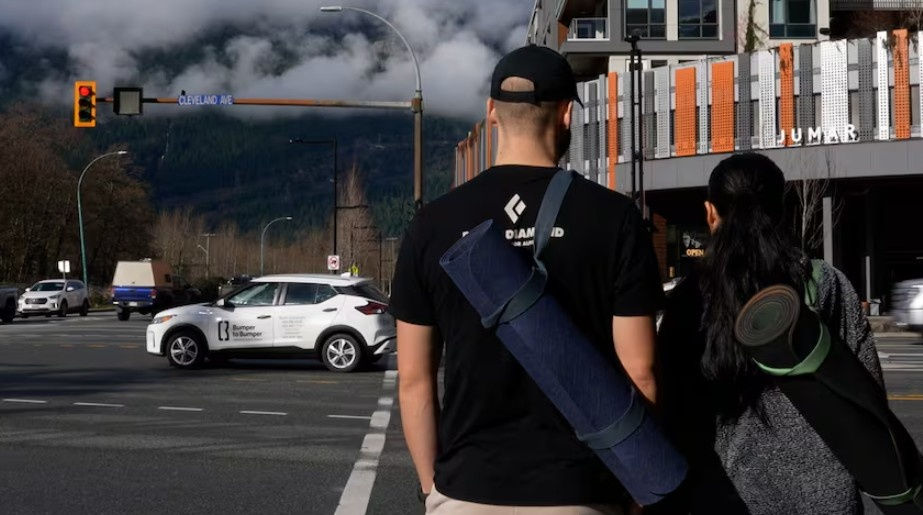
New speed zones take effect February 17 as District implements first phase of Transportation Master Plan
By Meera Gill
February 15, 2026
As of February 17, 2026, every street in Downtown Squamish and the Oceanfront is now a 30 km/h zone—a 20 km/h reduction from the previous limit. The change affects everyone who drives through the area, including residents of buildings like the Jumar, located at the busy intersection of Cleveland Avenue, Highway 99, and Loggers Lane.
The speed reduction is the first major implementation of Squamish's 2025 Transportation Master Plan, which was unanimously endorsed by Council on March 4, 2025. Mayor Armand Hurford has called it a "natural first step" in modernizing the town's infrastructure as Squamish's population is projected to reach 35,000 by 2040.
The Collision Data Behind Squamish's Speed Reduction
The District's decision is backed by four years of troubling collision statistics. Between 2020 and 2024, the Jumar intersection alone recorded 205 collisions—roughly one crash every week. Despite making up a small portion of Squamish's total area, Downtown and the Oceanfront accounted for 27% of all reported collisions during that period, according to ICBC data.
The 30 km/h limit isn't arbitrary. Research from the National Association of City Transportation Officials shows that a pedestrian struck by a vehicle at 50 km/h has a 50% to 80% chance of severe injury or death. At 30 km/h, that survival probability jumps to 85%–90%. Dr. Ceinwen Pope, medical health officer for the Sea-to-Sky region, called this 20 km/h reduction "the most effective public health intervention the District can make to reduce traumatic injuries."
In summer 2024, the District launched an online tool allowing residents to mark areas where they felt unsafe. Twenty percent of all safety concerns were concentrated in the Downtown and Oceanfront area.
What Drivers in Downtown Squamish Can Expect
The practical impact is straightforward: driving through the 30 km/h zone will add approximately 3 to 4 minutes to trips that previously took 8 minutes at 50 km/h. For residents living in buildings like the Jumar, this affects daily commutes in and out of the neighborhood. The intersection remains a high-traffic transition point where drivers move from Buckley Avenue into the pedestrian-heavy commercial zone.
The District has allocated funds in the 2026 Capital Plan for traffic calming measures near the Jumar intersection. These include lane narrowing using bollards and paint to reduce the perceived width of roads, which studies show naturally encourages drivers to slow down. Raised crosswalks will be installed at the Buckley/Cleveland intersection that force vehicles to slow down while remaining passable for emergency vehicles. Curb extensions at corners will shorten crossing distances and improve pedestrian visibility.
These physical changes won't be installed immediately—construction is scheduled for later in 2026. In the meantime, compliance relies on new signage and driver awareness.
Cleveland Avenue and Highway 99: The Critical Gateway
The Jumar building sits at one of Squamish's most challenging intersections. The Cleveland Avenue and Highway 99 junction serves as a gateway between high-speed arterial traffic and the pedestrian-focused downtown core. Under the District's March 2025 Traffic Calming Policy, Buckley Avenue is classified as a Major Collector, which means it must remain accessible for emergency vehicles while managing the speed transition into commercial zones.
Traditional speed humps are generally banned on Major Collectors in Squamish to prevent damage to fire trucks and ambulances. That's why the District is using alternative methods like the raised crosswalks and lane narrowing scheduled for 2026.
How Squamish Residents Are Responding
The new speed limit has sparked debate in local Facebook groups and on Reddit's r/Squamish community. Some residents have expressed frustration with enforcement concerns, pointing out that Squamish RCMP is already stretched thin. Without consistent police presence or automated enforcement, some question whether the new limit will be followed.
Safety advocates have welcomed the change, arguing that lower speeds make streets more accessible for children, seniors, and cyclists. Organizations like Parachute Canada have praised Squamish's move, which aligns with "Vision Zero" initiatives in cities like Vancouver that aim for zero traffic fatalities. A 2024 survey showed that 68% of BC residents supported 30 km/h limits specifically for residential and dense commercial areas, though social media discussions suggest opinions remain divided locally.
Squamish Transportation Master Plan: What Comes Next
Mayor Hurford has indicated that Downtown is just the beginning. The District is reviewing a plan to drop the default residential speed limit across all of Squamish from 50 km/h to 40 km/h by the end of 2026. If collision data shows improvement in the Downtown and Oceanfront areas by 2027, the 30 km/h zone may expand to Dentville and the Northyards.
The District is also exploring automated speed enforcement, including speed-on-green cameras at major intersections like the Highway 99 and Cleveland Avenue gateway. This technology would photograph vehicles exceeding the speed limit as they pass through green lights, addressing enforcement concerns that have dominated community discussions.
Key Information for Jumar Residents and Downtown Drivers
The change took effect on February 17, 2026, covering all streets in Downtown Squamish and the Oceanfront area. The speed dropped from 50 km/h to 30 km/h across the zone. The Jumar intersection, which recorded 205 crashes between 2020 and 2024, is a primary focus of the safety initiative. Physical traffic calming measures are scheduled for installation later in 2026.
The District acknowledges that the first few months will be an adjustment period as drivers adapt to the new limits. Residents driving through the affected areas should watch for new signage and expect slower traffic flow, particularly during peak hours when the intersection is already congested.
This speed reduction represents a significant shift in how Squamish approaches road safety, moving toward the same pedestrian-focused model that larger BC municipalities have adopted. Whether it reduces collisions as intended will depend on both driver compliance and the infrastructure changes scheduled for later this year.


Lowering speed to 30 km/h seems like a smart move for safety, but enforcement will be key to making it effective in Squamish. https://pctcalc.org